In late September, I traveled to Stockbridge, Massachusetts, best known as the home of the great American illustrator Norman Rockwell. My plan was to spend three weeks "leaf peeping" throughout the Northeast, hoping I would occasionally find myself in a time and place worthy of capturing as photographic source material for new Dreamscapes.
I held this ambition lightly, because I know from past experience how hard it is to find quintessential New England autumn scenes with peak color, lighting, and skies all at once.
Over the course of my stay, I drove backroads through seven states and sought inspiration in fourteen museums. In the end, I came home empty-handed... and I felt okay about that.
Don't get me wrong: more than a handful of times, I found myself immersed in breathtaking explosions of fall light and color. I just never found the right composition and combination of elements in a single scene, at the right moment, to warrant developing a new artwork. Perhaps I set the bar too high earlier this year when I created this imaginary landscape using source material created via generative AI using a process I call “synthetic photography”:
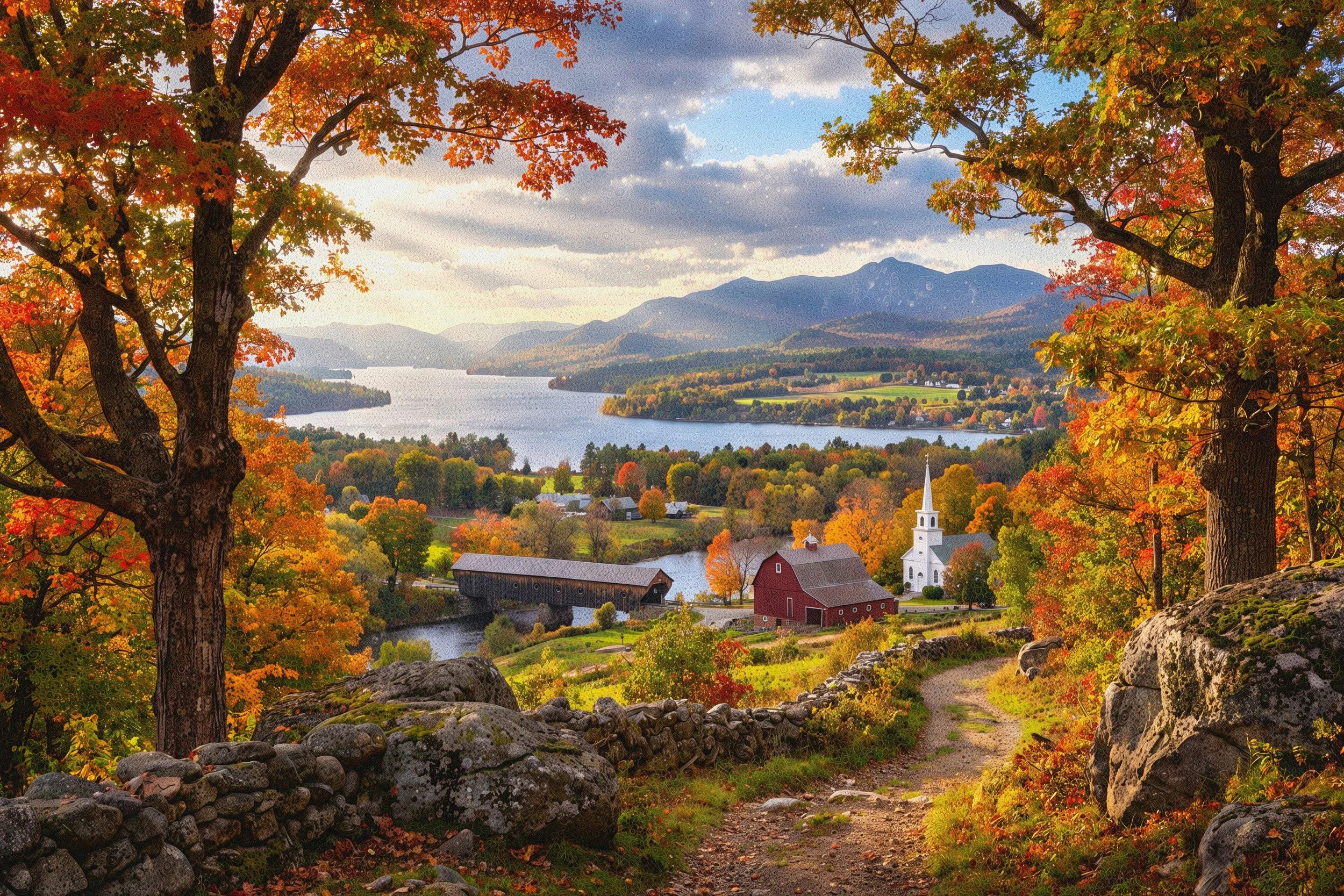
“Epic New England” by Daniel Ambrosi (2026)
The tree I didn’t stop for
Early in the trip, I had a fleeting experience that I thought boded well. On my short drive home from dinner in downtown Stockbridge, an amber sun peeked under the clouds just before setting. For a time, things turned positively magical — too briefly, and in settings not conducive to stopping and capturing, but memorable! On my left, a bit of fog amid the roadside trees had me driving through diverging crepuscular rays; on my right, a large tree in peak yellow-orange-red had turned intensely electric in a very Maxfield Parrish way, like his painting below:
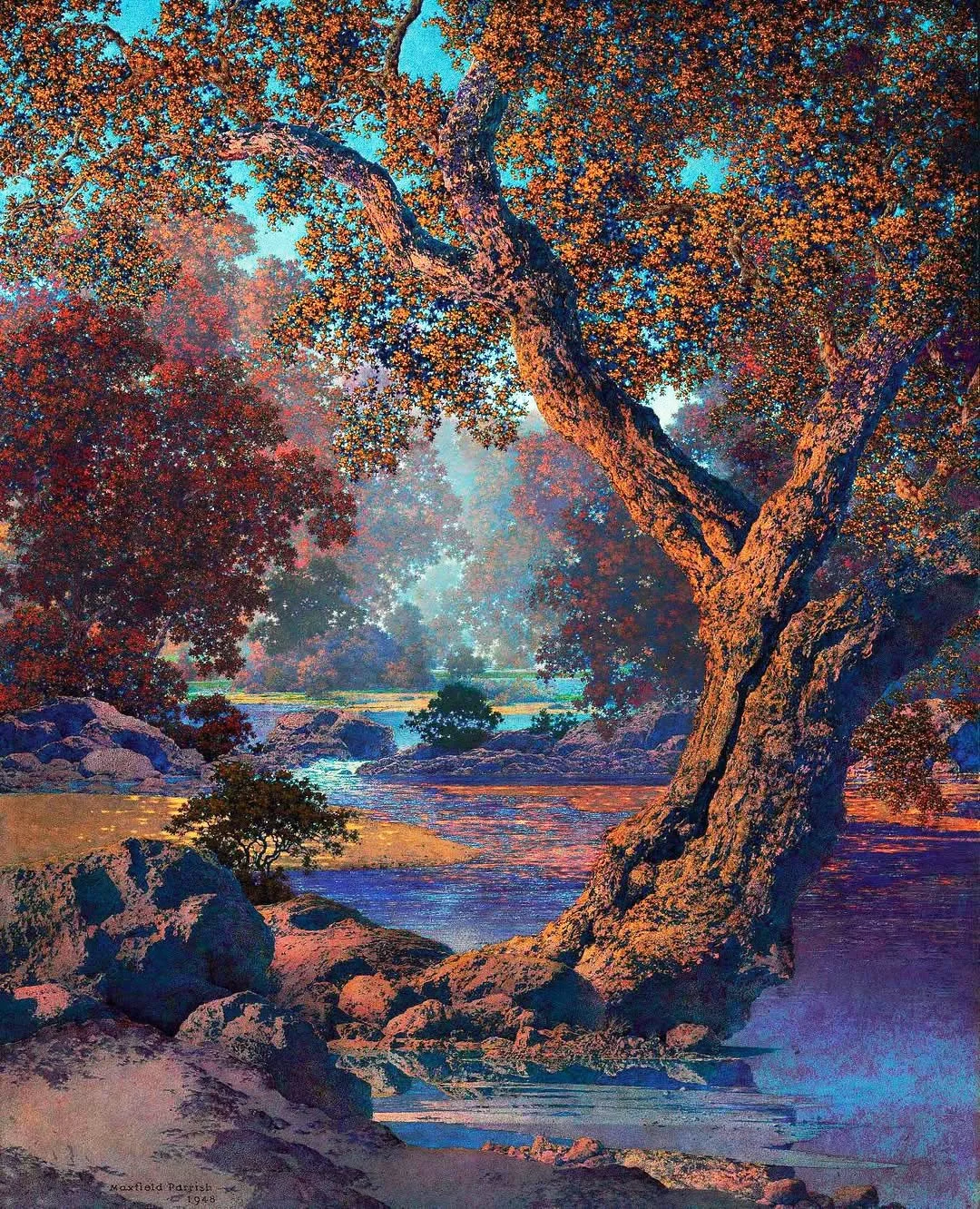
“Autumn Brook” by Maxfield Parrish (1948)
Old Maxfield wasn't just imagining things; this really does happen sometimes in New England in the fall. I'm kicking myself for not stopping to photograph that tree, but part of me thought that if I kept driving, I might capture the magic unfolding at Oronoque, the amazing historic property where I was staying courtesy of a very generous friend. Alas, the ephemeral effect faded. But I'll never forget it!
Gobsmacked on the backroads
Throughout my stay, I had the pleasure of driving through a number of stretches of peak fall color: past the base of Bromley Mountain ski resort in Vermont, along the country road to Amherst, Massachusetts, even on the New York State Thruway. I was particularly smitten by the way vibrant blood orange- and tangerine-colored trees popped amid a wonderful panoply of golden, green, and deep red foliage. The variety of tree species in the Northeast never ceases to amaze me. Still, these gobsmacking displays of autumn richness were mere roadside attractions, not classic New England scenes worth developing into grand-scale artworks.
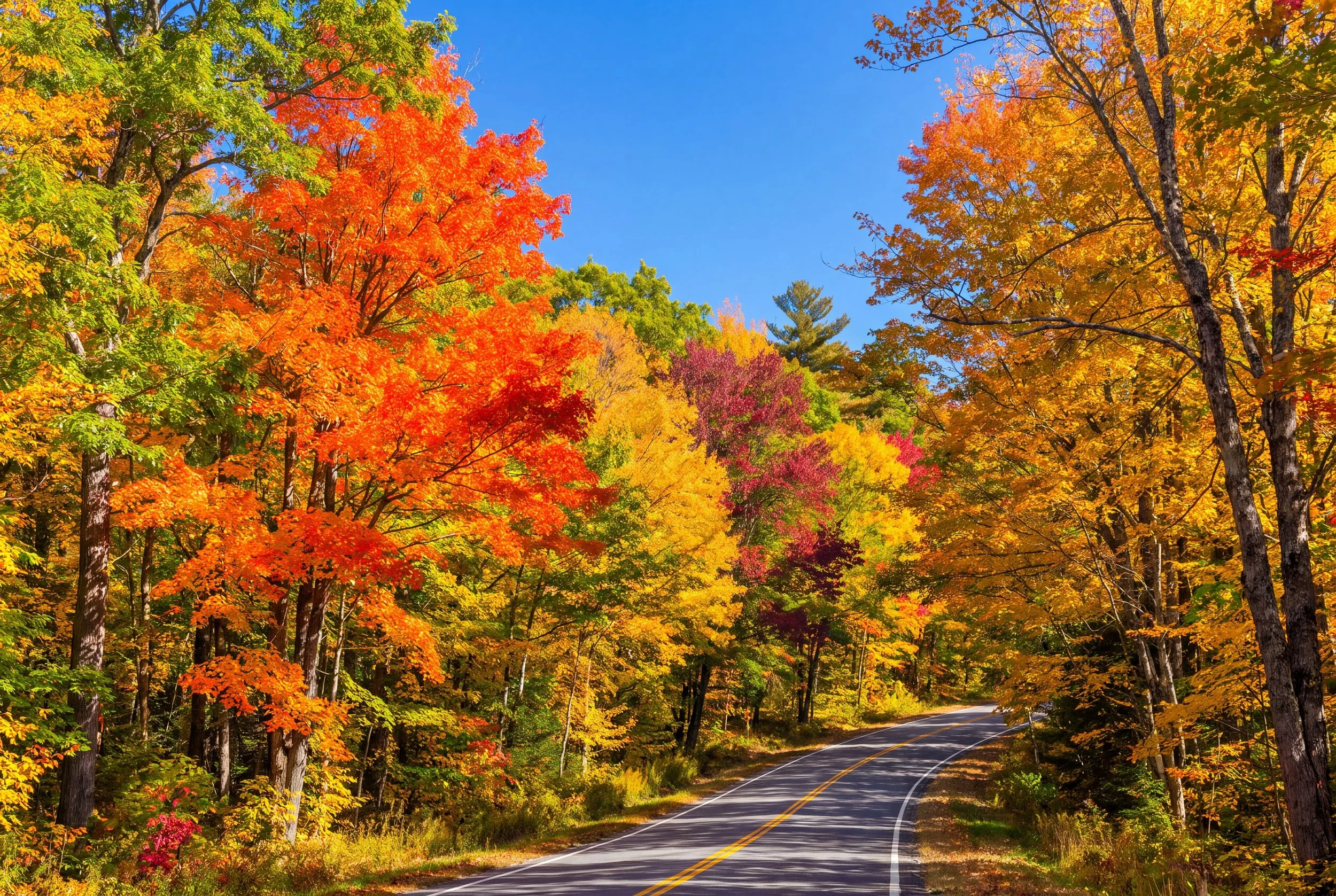
[Illustration created via generative AI by the author]
Painting from memory
Let's not forget: the great Hudson River School painters of the 19th century, whose inspiring landscapes are imprinted on our cultural memory, had the luxury of idealizing what they saw. Take, for example, American artist Jasper Francis Cropsey (1823–1900), famously known as "The Painter of Autumn." His monumental view of the Hudson River Valley, Autumn — On the Hudson River (1860), was painted from memory in the artist's London studio. It represents not what a landscape was, but what a landscape could be.
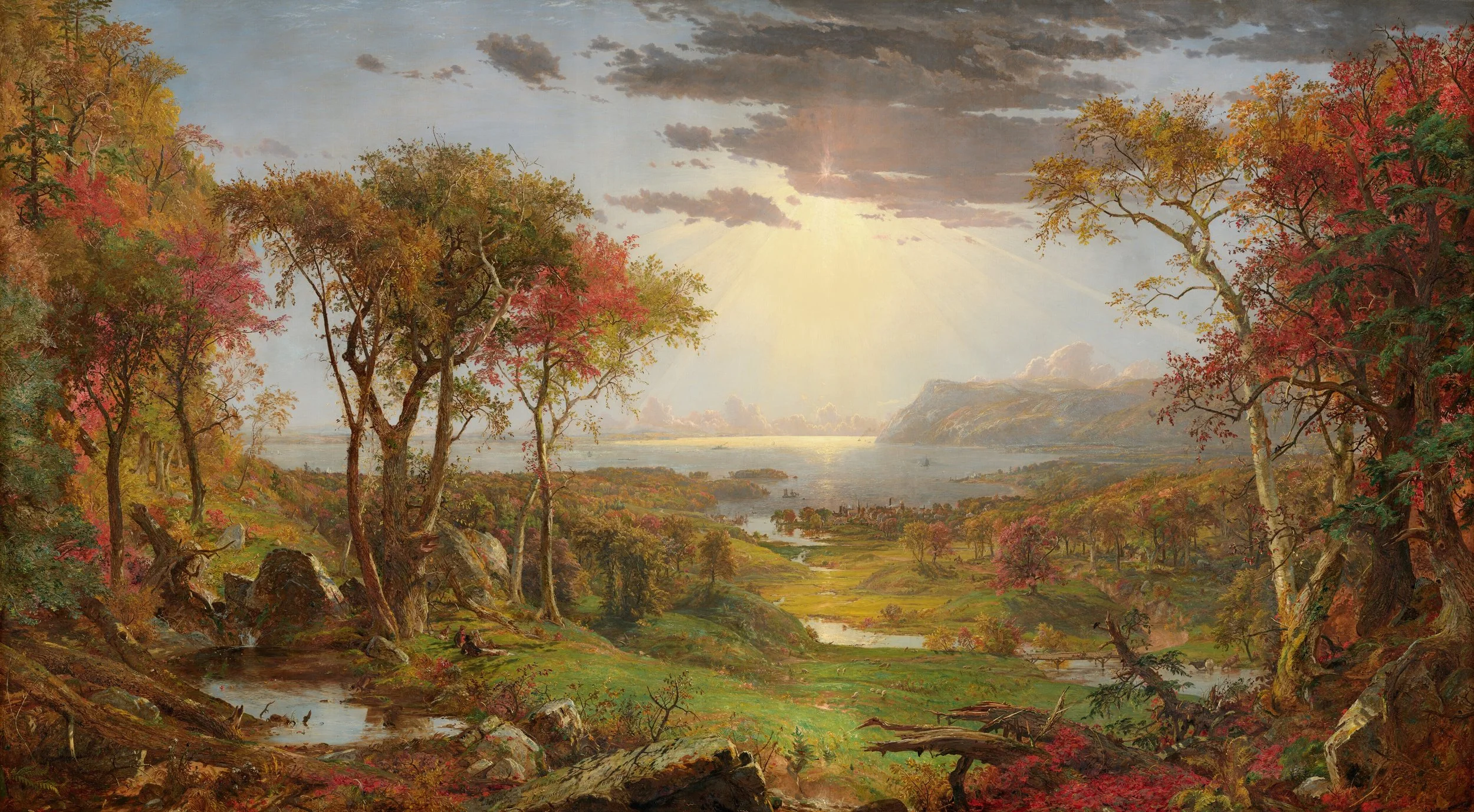
“Autumn — On the Hudson River” by Jasper Francis Cropsey (1860)
Why the looking is never wasted
Which brings me to my conclusion: I thoroughly enjoyed, and was deeply inspired by, my New England sojourn this fall, despite not netting viable source photography for my artistic ambitions. Just being in it was enough for me.
You might reasonably ask: if imagination is what matters, why go hunting for real scenes at all? Because my camera-sourced Dreamscapes begin with photographs I take myself, in places where I have actually stood. That grounding in a real place and a real moment of light is what keeps the dreaming honest. But I've come to see that the looking is never wasted. Every amber sunset and electric tree goes into the well. And sometimes what comes back out is a landscape that never existed. My Epic New England is exactly that kind of vision: like Cropsey's Hudson, it isn't a place I found, but a place I imagined — not what New England is, but what it could be.
As Parrish, Cropsey, and so many other landscape artists have demonstrated, the real world can ignite the imagination. And imagination can be materialized in artworks to share with and inspire others. Whether that imagination is captured in paint or film or pixels, executed by brushes or cameras or AI, doesn't matter to me. What matters most is the artistic vision, and the human experiences that formed it.