A Kindred Spirit in a Concrete Church
I visited Berlin for the first time last week. It's one of the few major European cities I had never seen. A gap in my travel schedule happened to line up with the annual Berlin Art Week, and that was all the excuse I needed.
I saw five gallery openings, three museums, and a major art fair. The experience that has stayed with me most, though, wasn't on my itinerary. While sauntering through the city, I stumbled into KÖNIG GALERIE, housed in the former Saint Agnes Church, an impressively huge Brutalist concrete space. Inside was ECHOTROPIA, the third exhibition there by the painter Christian Achenbach. I had never heard his name. I left with a new kindred spirit.
Landscape, unbound
Achenbach's paintings in this exhibition are unmistakably landscapes, informed by centuries of that tradition, and yet they break nearly every rule I know. A sky burns magenta above a foreground of neon-green grid lines. Mountains are built from stacked, striated bands of color, like agate or geological strata. Water winds through a canyon in stripes of electric orange and blue. In one canvas, a blue tree, red foliage, and a still-life table sit in front of a shimmering lake, framed by curtains and a checkerboard floor. Everything is traced in pale, glowing contour lines, so the forms feel both solid and slightly unreal.
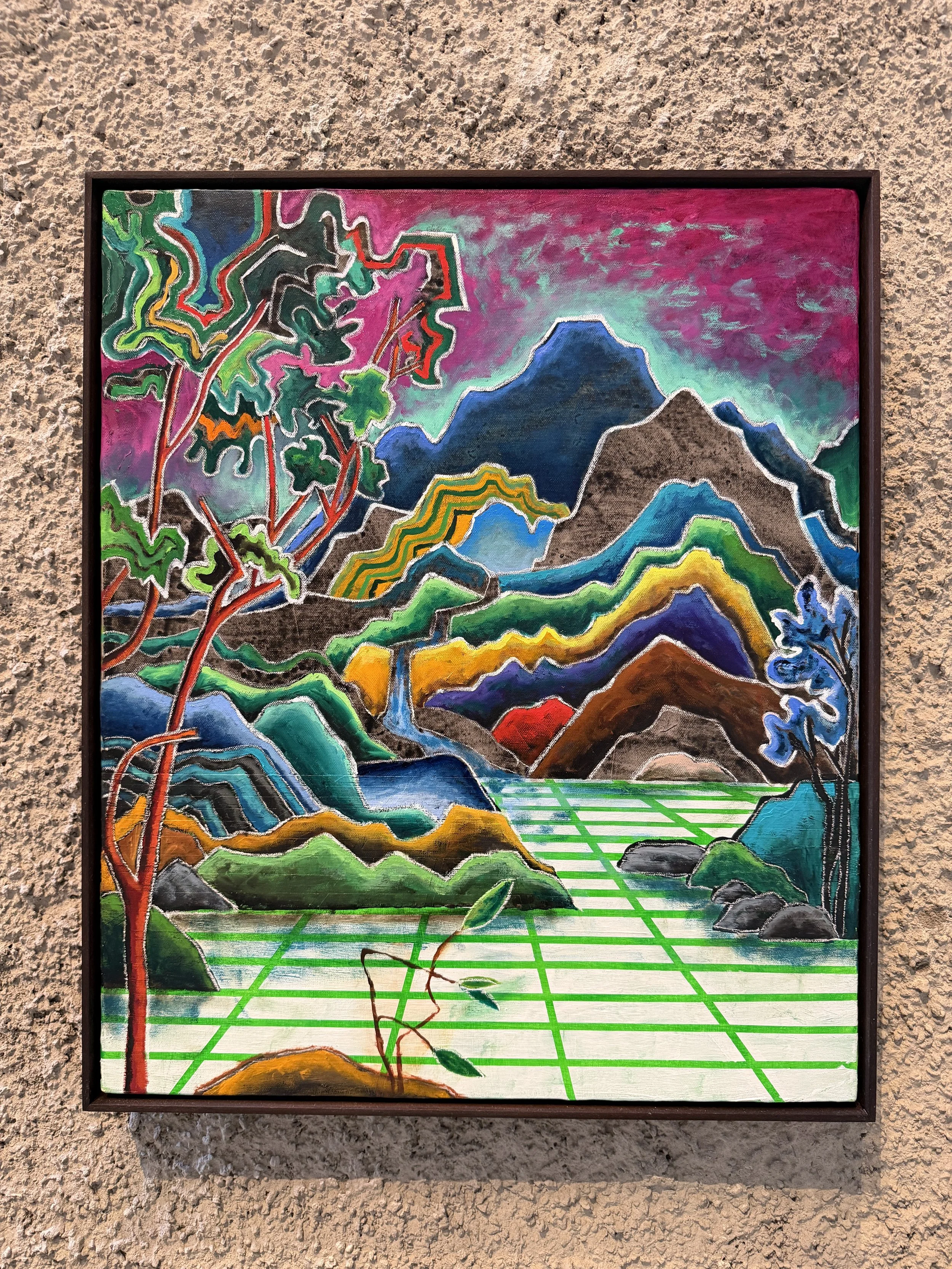
“Batoum” by Christian Achenbach (24 3/4 x 20 7/8 in / 63 x 53 cm)
The colors don't describe anything. They organize, and they carry mood. The gallery text speaks of a rhythmic structure, and I felt that: the paintings hum like a musical score, or like an echo.
A grid, a stage, and many vantage points
The centerpiece of the show is GENESIS, a monumental painting (eight meters wide!) made especially for the nave. Its foreground is a stark grid, which the gallery text links to the enlargement grids Renaissance painters used to transfer sketches onto larger panels. It's a wonderful gesture: the scaffolding of picture-making left in plain view, set against a landscape that is anything but restrained. As someone who works where technology meets landscape, I love an artist who lets the underlying structure show.
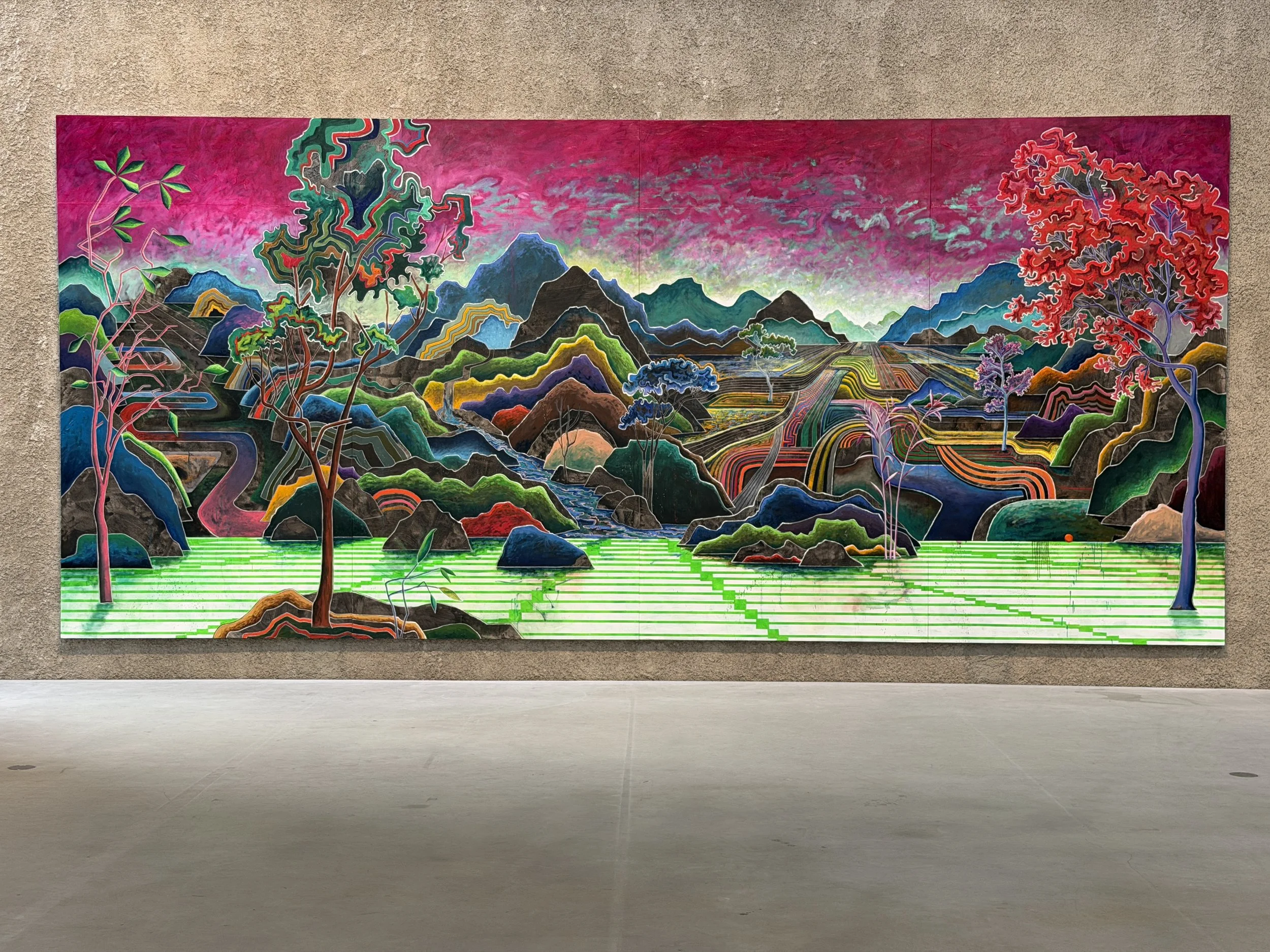
“Genesis” by Christian Achenbach (141 3/4 x 315 in / 360 x 800 cm)
The text also compares his multiplied viewpoints to what the Chinese painter Guo Xi called the "angle of totality," in which a landscape is apprehended from several vantage points at once. Standing in front of these works, you feel it. There is no single fixed perspective to settle into. The eye takes its own path, and there are many paths available.
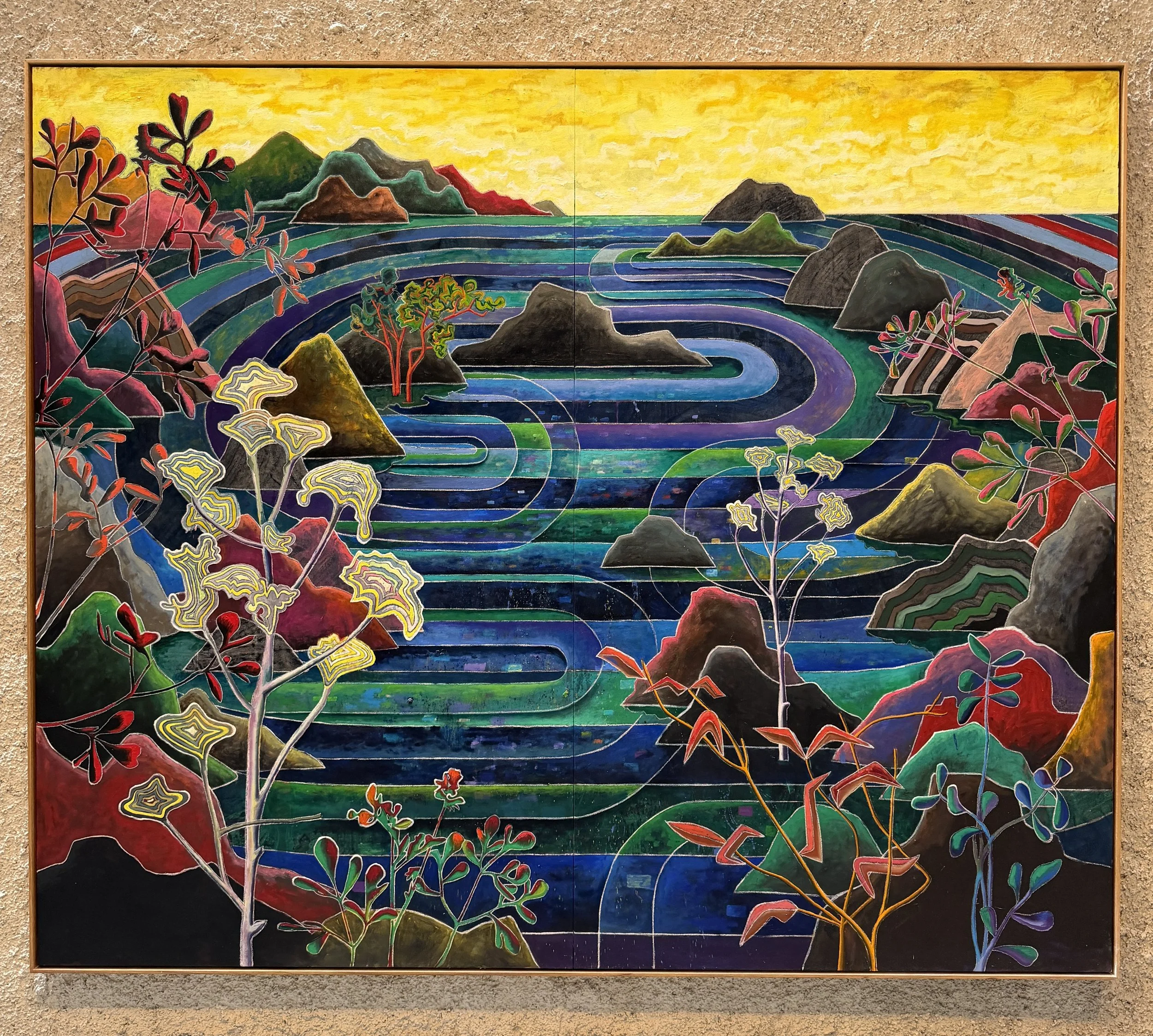
“Echotropia” by Christian Achenbach (100 x 119 3/4 in / 254 x 304 cm)
Not what a landscape looks like, but how it is seen
This is what I related to most. Achenbach's landscapes depart from realism and remind us that how a landscape is perceived is personal. How it is seen, felt, and thought about belongs to the artist, and to each person who then stands in front of the work. The painting isn't a record of a place. It's a record of an experience of a place, and it invites yours.
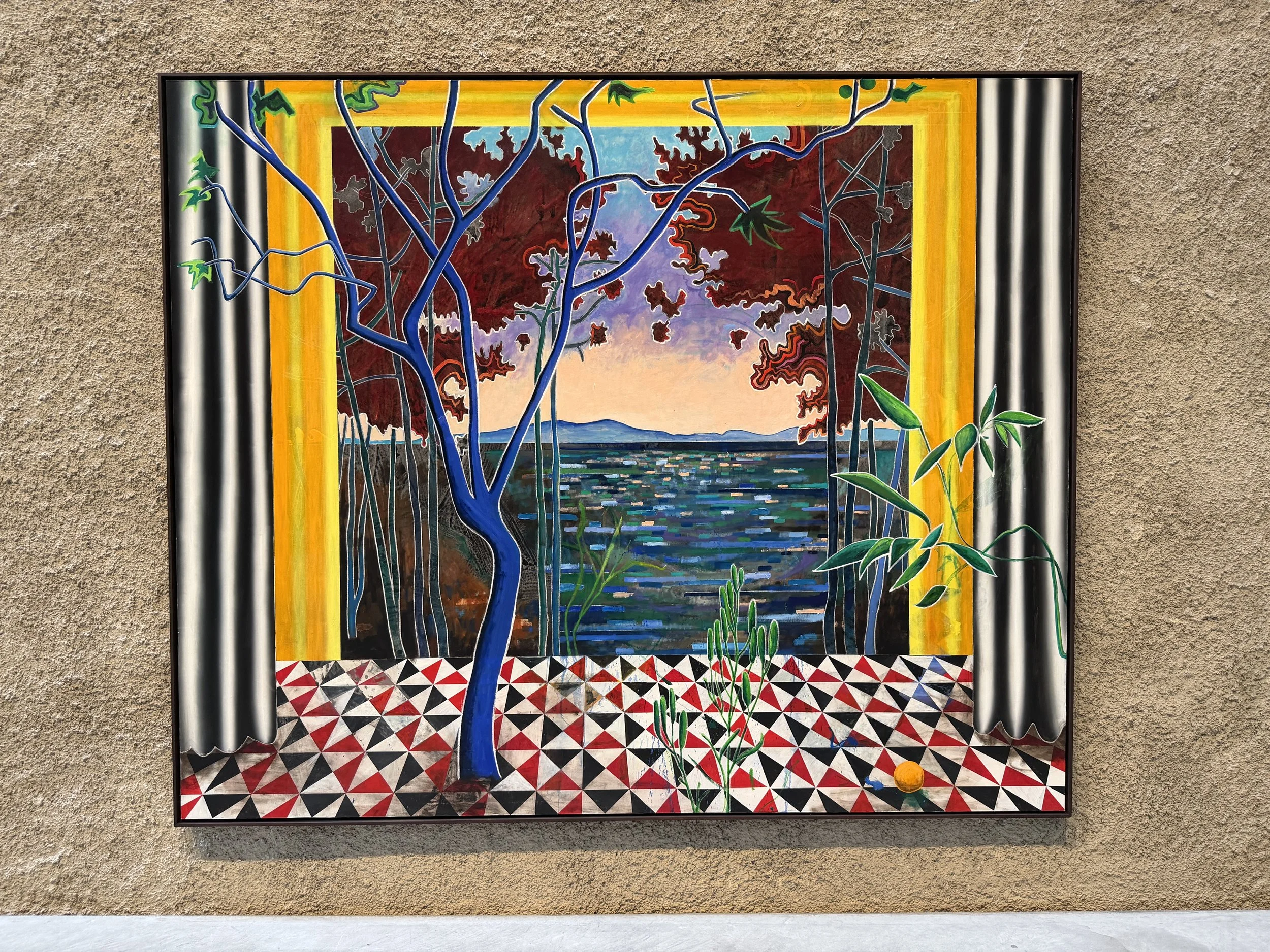
“Chatto” by Christian Achenbach (92 1/8 x 111 3/4 in / 234 x 284 cm)
His decision to work at monumental scale reinforces the point. Scale here isn't spectacle for its own sake. He is after a landscape experience, not just a landscape image. You don't view these paintings so much as step into them. I felt the same thrill in Refik Anadol's DATALAND, another immersive environment that changes what you expect from an artwork.
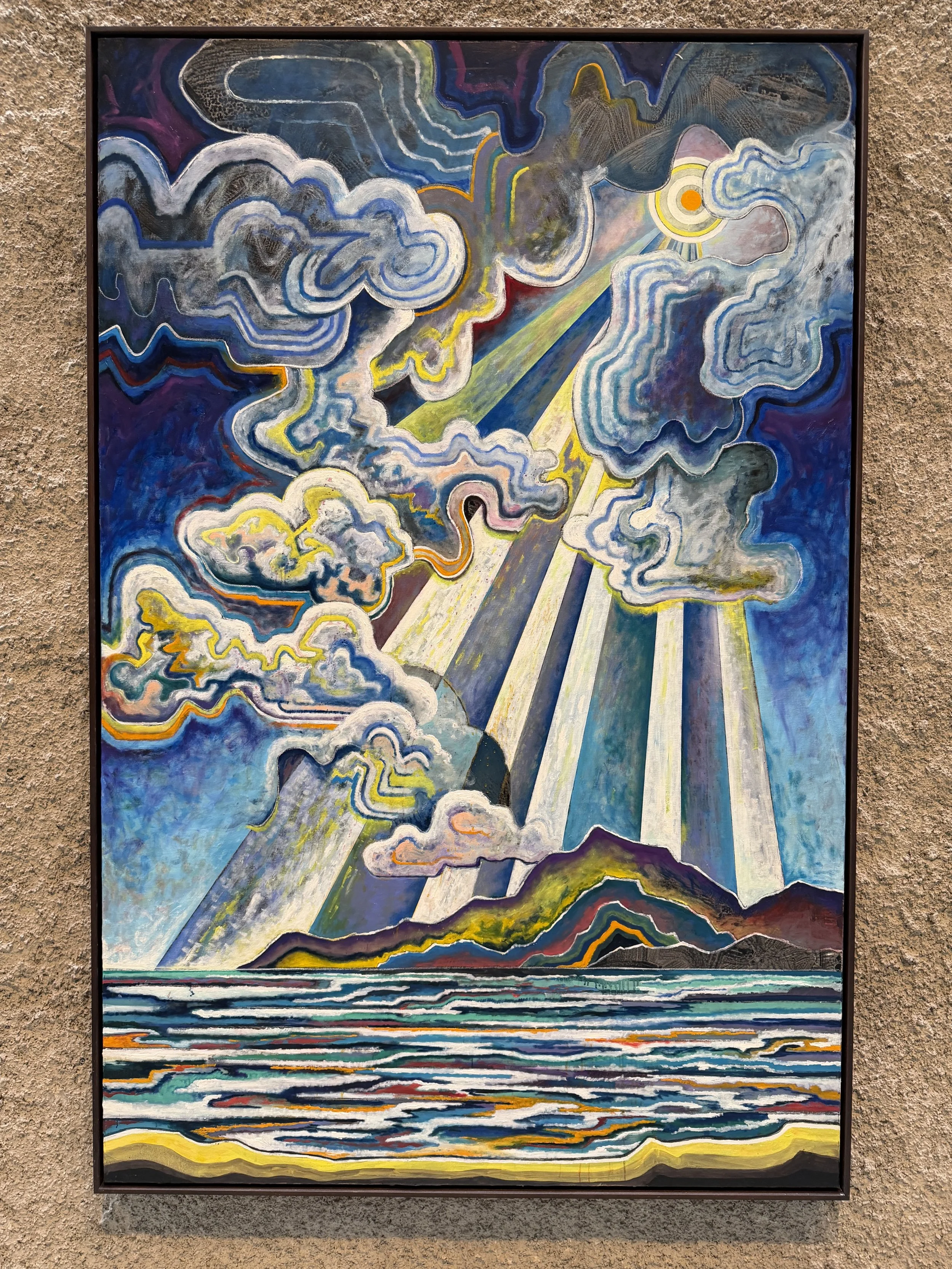
“Silhouette” by Christian Achenbach (92 1/8 x 60 5/8 in / 234 x 154 cm)
Gratitude for the unplanned
I'm grateful for the full week of art in Berlin, but mostly for the serendipity of that afternoon: a former church, a wall of impossible color, and a painter who reminds me that landscape is still a living, unfinished conversation. ECHOTROPIA runs through November 8, 2026. If you find yourself in Berlin, go.
https://www.koeniggalerie.com/blogs/exhibitions/christian-achenbach-echotropia